쥬비덤 필러, 유변학이란 무엇인가?
- 작성자
- DR.CAPYBARA
- 작성일
- 2026.07.18
- 조회
- 265
볼벨라, 볼리프트, 볼루마, 볼룩스: 무엇이 다를까?
흔히 묻는 질문으로 이해하는 필러 유변학(Rheology)
Q1. 히알루론산이란 무엇인가요?
히알루론산(HA)은 인체에 자연적으로 존재하는 물질입니다. 이는 피부, 관절, 눈, 결합조직에 존재하는 일종의 당 분자(다당류)입니다.
히알루론산의 주요 생물학적 기능은 수분을 보유하는 것입니다. 히알루론산 1그램은 최대 수 리터의 물을 결합할 수 있으며, 이 때문에 피부 수분, 탄력, 볼륨 유지에 핵심적인 역할을 합니다.
미용의학에서 히알루론산이 필러로 사용되는 이유는 두 가지 중요한 특성 때문입니다.
- 친수성(수분 결합 능력) → 볼륨과 수분감을 형성
- 생체적합성 → 시간이 지나면서 인체에 의해 자연적으로 분해됨
하지만 체내의 천연 히알루론산은 매우 빠르게 분해됩니다. 이러한 이유로 필러 제품에는 가교결합(cross-linked)된 히알루론산이 사용되며, 이는 분자를 안정화시켜 조직 내에서 더 오래 유지되고 구조적 지지력을 제공할 수 있게 합니다.
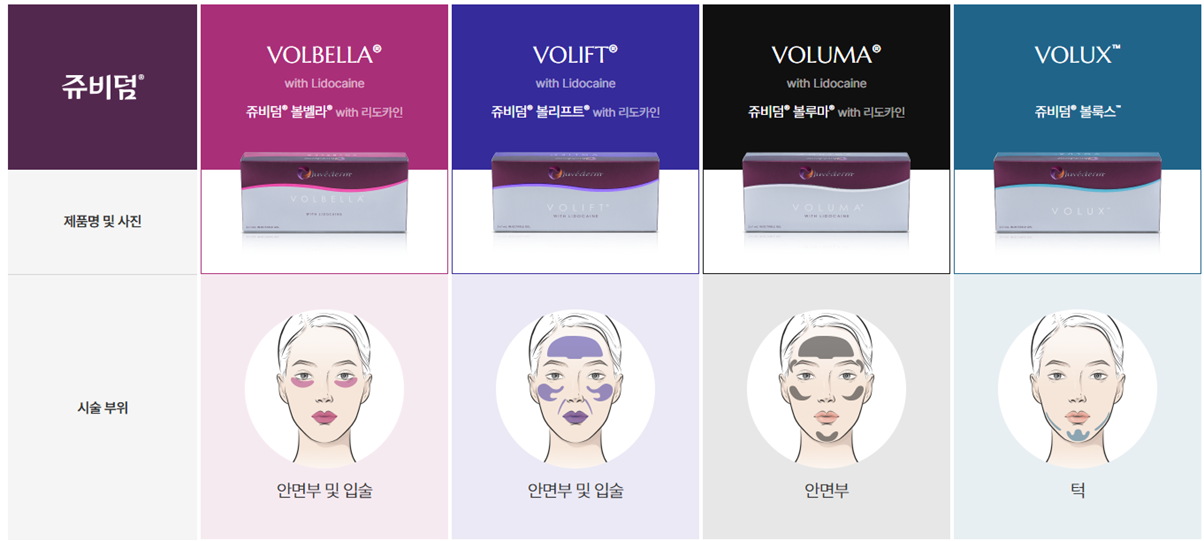
볼벨라, 볼리프트, 볼루마, 볼룩스와 같은 다양한 필러들은 모두 동일한 분자를 기반으로 하지만, 가교결합 구조와 젤 특성이 각기 다르게 설계되어 있어 얼굴에서의 거동이 크게 달라집니다.
Q2. 쥬비덤 필러들은 모두 같은 히알루론산으로 만들어지는데, 왜 이렇게 종류가 다양한가요?
네, 모두 히알루론산으로 만들어지며 쥬비덤 바이크로스(Vycross) 계열에 속합니다. 하지만 주입 후 동일하게 작용하도록 설계된 것은 아닙니다.
각 제품은 서로 다른 유변학적 특성—압력 하에서 필러가 변형되고, 움직이고, 조직을 지지하는 방식을 결정하는 물리적 특성—을 가지고 있습니다.
모든 용도에 하나의 필러를 사용하는 대신, 바이크로스 라인은 얼굴 각 부위의 기계적 요구 조건에 맞게 각 제품이 대응하도록 개발되었습니다.
Q3. 의사들이 필러를 "부드럽다" 또는 "단단하다"고 말할 때 그것은 무엇을 의미하나요?
이 용어들은 젤이 힘을 받을 때 어떻게 반응하는지를 나타냅니다.
부드러운 필러는 쉽게 변형되며 얼굴의 움직임을 자연스럽게 따라갑니다.
단단한 필러는 변형에 저항하여 조직을 리프팅하고 돌출감을 만들어낼 수 있습니다.
가장 중요한 측정값 중 하나는 필러의 탄성 강도를 나타내는 **G'(G프라임)**입니다.
바이크로스 계열 내에서 제품들은 하나의 연속적인 스펙트럼을 형성합니다.
볼벨라 → 볼리프트 → 볼루마 → 볼룩스
이 스펙트럼을 따라 이동할수록:
- G' 값이 증가하고
- 구조적 지지력이 증가하며
- 돌출감(프로젝션)이 증가하고
- 압축 저항성이 증가하며
- 유연성은 점차 감소합니다
이러한 이유로 해부학적 부위에 따라 서로 다른 필러가 선택됩니다.
Q4. 볼리프트는 어디에 위치하나요?
볼리프트는 바이크로스 계열 중 거의 정확히 중간에 위치합니다.
이는 적당한 구조적 지지력과 뛰어난 유연성을 결합하도록 설계되었습니다.
볼벨라와 비교하면, 볼리프트는 더 많은 리프팅 효과와 더 나은 볼륨 회복력을 제공합니다.
볼루마와 비교하면, 더 부드럽고 얼굴 움직임에 더 자연스럽게 적응합니다.
이러한 균형 덕분에 볼리프트는 팔자주름, 마리오네트 라인, 입술 윤곽이 필요한 부위, 그리고 좀 더 부드러운 결과가 선호되는 일부 중안면 또는 턱 부위와 같이 지지력과 유동성이 모두 필요한 부위에 특히 적합합니다.
많은 임상의들이 볼리프트를 바이크로스 계열의 "다이내믹" 필러로 여기는데, 이는 자주 움직이는 얼굴 부위에서 우수한 성능을 발휘하기 때문입니다.
Q5. 볼룩스가 가장 강한 필러라면, 왜 모든 부위에 사용되지 않나요?
얼굴의 각 부위마다 생체역학적 요구 조건이 다르기 때문입니다.
입술은 끊임없이 움직입니다.
볼(뺨)은 미소를 지을 때 압축됩니다.
턱선은 주로 구조적 지지력을 필요로 합니다.
가장 단단한 필러를 모든 부위에 사용하면 종종 부자연스러운 움직임이 발생할 수 있습니다.
대신, 각 필러는 조직의 기능에 맞게 매칭됩니다.
부드러운 필러가 더 약한 것이 아니라, 단지 다른 목적을 위해 설계된 것입니다.
Q6. 응집력(Cohesivity)이란 무엇인가요?
응집력은 젤이 자신의 형태를 얼마나 단단히 유지하는지를 나타냅니다.
응집력이 높은 필러는 주입 후 형태를 유지하며 더 선명한 윤곽을 만듭니다.
응집력이 낮은 필러는 조직 내에 더 고르게 퍼져 더 부드러운 전환을 만듭니다.
바이크로스 계열 내에서는 응집력이 일반적으로 볼벨라에서 볼룩스로 갈수록 증가합니다.
이는 다음과 같은 이유를 설명합니다.
- 볼벨라는 섬세한 조직에 자연스럽게 스며듭니다
- 볼리프트는 형태 유지와 유연성의 균형을 이룹니다
- 볼루마는 안정적인 깊은 구조적 지지력을 제공합니다
- 볼룩스는 강력한 턱과 턱선 윤곽을 유지합니다
Q7. 어떤 필러가 가장 자연스럽게 움직이나요?
자연스러운 움직임은 주로 유연성에 달려 있습니다.
움직임이 많은 얼굴 부위는 반복적으로 변형되고 회복되면서도 눈에 띄거나 만져지지 않는 필러를 필요로 합니다.
네 가지 제품 중:
- 볼벨라는 가장 뛰어난 유연성을 제공합니다
- 볼리프트는 추가적인 지지력을 제공하면서도 우수한 움직임을 유지합니다
- 볼루마는 적당한 유연성을 가지고 있습니다
- 볼룩스는 움직임보다 안정성을 우선시합니다
"최선"의 선택은 필러 자체보다는 치료 부위에 따라 달라집니다.
Q8. 어떤 필러가 가장 큰 리프팅 효과를 제공하나요?
리프팅 능력은 탄성 강도와 압축 저항성이 증가할수록 커집니다.
일반적으로:
- 볼벨라는 리프팅보다는 섬세한 결 개선을 제공합니다
- 볼리프트는 뛰어난 적응력과 함께 적당한 리프팅을 제공합니다
- 볼루마는 상당한 중안면 리프팅을 제공합니다
- 볼룩스는 하안면에 최대의 돌출감과 구조적 지지력을 제공합니다
이 필러들을 더 강하거나 더 약하다고 생각하기보다는, 서로 다른 기계적 역할에 최적화된 것으로 이해하는 것이 더 정확합니다.
Q9. 그렇다면 이 네 가지 필러를 어떻게 바라봐야 할까요?
네 개의 별개 제품이 아니라, 하나의 연속적인 생체역학적 스펙트럼을 상상해보세요.
| 제품 | 주요 기계적 특성 |
| Volbella | 부드러운 통합 |
| Volift | 적당한 지지력을 갖춘 다이내믹한 유연성 |
| Voluma | 구조적 리프팅 |
| Volux | 최대의 돌출감과 윤곽 형성 |
각 제품은 이 스펙트럼 상의 특정 위치를 차지합니다.
목표는 가장 강한 필러를 선택하는 것이 아니라, 해당 치료 부위의 해부학적 구조와 기능에 가장 잘 맞는 물리적 특성을 가진 필러를 선택하는 것입니다.
필러 선택이 단순한 선호도가 아니라 유변학(rheology)에 기반해 이루어질 때, 시술은 더 예측 가능하고, 더 자연스러우며, 더 지속적인 결과를 갖게 됩니다.