DORE
DORÉ BLOGDORE LONGEVITY
Longevity: Live Longer, Stay Well, Stay Naturally Beautiful
Living longer is only part of the story.
What matters is how well — and how naturally — you age.
Q1. What is Longevity?
A. Longevity is not simply about living longer. It is about maintaining your health, function, and quality of life for as long as possible.
In the past, “anti-aging” often focused on correcting visible signs of aging — smoothing wrinkles, lifting sagging skin, or restoring lost volume.
Today, we are beginning to look at aging differently.
Rather than seeing aging as something that suddenly happens, we understand it as a gradual process in which the function and structure of our body and skin slowly change over time.
That is where the concept of longevity comes in.
Instead of asking,
“How long will I live?”
we are increasingly asking,
“How long can I stay healthy, active, and naturally youthful?”
The same principle applies to the skin.
Longevity-focused skin care is not simply about treating wrinkles after they appear. It is about maintaining the skin’s fundamental environment — including its barrier, hydration, collagen, elasticity, and overall resilience — for as long as possible.
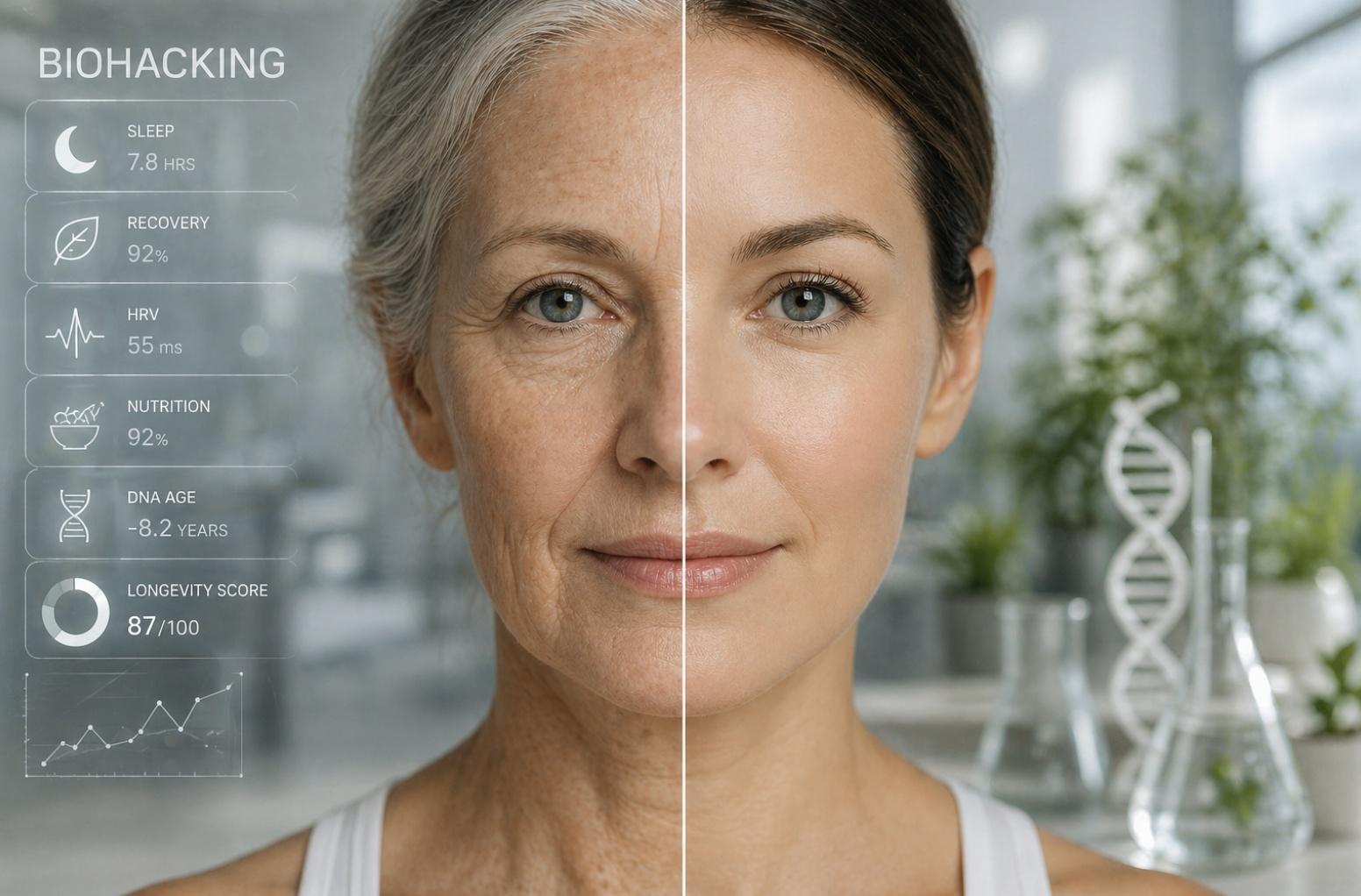
Q2. How is Longevity different from traditional Anti-Aging?
A. Anti-aging focuses on improving the signs of aging you already have. Longevity focuses on managing the aging process itself.
For example, treating deep nasolabial folds or a sagging jawline is a classic anti-aging approach.
A longevity approach looks further ahead.
It considers how to:
Maintain skin thickness and resilience
Support collagen and elasticity over time
Preserve the skin barrier and hydration
Minimize cumulative UV exposure and chronic irritation
Maintain a healthy balance of facial fat, muscle, and soft tissue
Simply put:
Anti-Aging = Treating the signs of aging
Longevity = Managing how you age
It is less about reversing every sign of aging and more about creating the conditions for healthier aging over time.
Q3. Is Longevity more important for younger people?
A. Longevity actually begins before aging becomes obvious.
Aging does not suddenly begin on a specific birthday.
Changes in collagen, skin barrier function, UV-related damage, muscle mass, and body composition can develop gradually long before they become visible in the mirror.
For people in their 20s, the focus may simply be on protecting what they already have — healthy lifestyle habits, sun protection, sleep, nutrition, and sensible skin care.
In your 30s and 40s, personalized maintenance and preventive treatments may become more relevant depending on your skin and individual aging pattern.
In your 50s and beyond, the goal may shift toward addressing structural changes while preserving the health and balance of the tissues that remain.
Longevity is not a treatment for a particular age group.
It is a strategy for aging well at every age.

Q4. What can I do for Longevity at home?
A. The foundation of longevity happens outside the clinic.
You do not need an elaborate routine to start.
Some of the most meaningful things you can do are surprisingly simple:
① Protect your skin from the sun
Cumulative UV exposure is one of the major environmental contributors to visible skin aging.
② Prioritize quality sleep
Sleep supports recovery and plays an important role in overall metabolic and physiological health.
③ Eat a balanced diet
Prioritize adequate protein, whole foods, and a variety of nutrients while limiting excessive sugar and highly processed foods.
④ Exercise regularly
Maintaining muscle strength, mobility, and cardiovascular fitness is fundamental to healthy aging.
⑤ Avoid smoking and keep alcohol moderate
For your skin, the basics still matter:
Daily sun protection + adequate hydration + a simple, consistent routine.
Longevity is rarely about one dramatic intervention.
It is much more about the small things you do consistently, year after year.

Q5. What can a clinic do for Longevity?
A. The first step is not deciding what treatment to do. It is understanding how you are aging.
Not everyone ages in the same way.
Someone with thin, fragile skin and reduced elasticity may need a very different approach from someone whose face has become heavier because of changes in facial fat and soft tissue.
A comprehensive assessment may look at:
Skin elasticity and collagen-related changes
Skin thickness and hydration
Pigmentation and vascular changes
Facial fat distribution
Skin and soft-tissue laxity
Muscle and underlying tissue changes
Based on these findings, treatments such as:
RF treatments, ultrasound-based lifting, lasers, skin boosters, collagen-stimulating treatments, neuromodulators, and fillers
may be considered when appropriate.
The goal is not to do more.
It is to do what your face actually needs, when it needs it.

Q6. Why does Longevity mean avoiding over-treatment?
A. Because the goal is not to look as young as possible today. It is to look healthy, balanced, and natural years from now.
Facial fat, for example, is not simply something that needs to be removed.
A youthful face needs an appropriate amount of facial fat and soft tissue. As we age, excessive volume loss can make the face look hollow, tired, or older.
The same principle applies to energy-based treatments.
More energy or more frequent treatments are not necessarily better. Skin thickness, elasticity, sensitivity, and recovery capacity should all be taken into account.
That is why we believe:
Longevity is less about More Treatment
and more about Better Timing, Better Balance.
The best treatment is not necessarily the strongest treatment.
It is the treatment that makes sense for your face, at your age, at that particular moment.
Q7. Are there any treatments everyone needs for Longevity?
A. No. There is no universal “longevity treatment.”
Everyone ages differently.
For some people, skin laxity may be the first concern.
For others, changes in facial fat and soft tissue may become noticeable first.
For others, pigmentation, redness, or changes in skin quality may be more significant.
That is why longevity-focused care should begin with an assessment rather than a predetermined treatment list.
A personalized plan might look something like:
Lifestyle & Skin Protection
↓
Preventive Maintenance
↓
Energy-Based Treatments When Appropriate
↓
Skin Quality & Collagen Support
↓
Volume or Lifting Treatments When Structural Changes Develop
The idea is to intervene when there is a reason to — not simply because a treatment is available.
Q8. What is the most important principle of Longevity?
A. Longevity is not about staying young forever. It is about aging well.
We cannot stop time.
And we should not have to.
But we can influence how we age.
Sleep well.
Move regularly.
Eat well.
Protect your skin from the sun.
And when appropriate, use medical treatments thoughtfully — at the right time and for the right reason.
That is what longevity means to us.
Not chasing youth.
Not fighting every wrinkle.
But maintaining health, function, balance, and natural beauty for as long as possible.
Longevity is not about staying young forever.
It is about staying well for longer.
At DORE CLINIC, we look beyond simply improving how you look today.
We believe aesthetic medicine should also consider how your face and skin will age tomorrow.
Rather than following a fixed treatment menu, we assess your individual aging pattern and develop a long-term strategy designed to help you maintain a healthy, balanced, and naturally beautiful appearance over time.
Because the goal isn't to look younger than your age.
It's to look like the best, healthiest version of yourself — at every age.


Doctor · Lifting Center, Anti-aging Center
Consultation and Reservation Inquiries
Please feel free to contact us with any questions you may have.