DORE
DORÉ BLOGWhat Is Sculptra? How It Works, Who It’s For, and How It Differs From Filler
What Is Sculptra? How It Works, Who It’s For, and How It Differs From Filler
Sculptra® has become increasingly popular among people looking for a more natural approach to facial rejuvenation.
But what exactly is Sculptra?
Is it a filler?
Does it add volume immediately?
How many treatments do you need?
And which areas of the face can be treated?
Unlike traditional dermal fillers, Sculptra is designed to stimulate your skin’s own collagen production, allowing results to develop gradually over time.
In this guide, we’ll answer the most common questions about Sculptra and explain why it has become a popular option for natural-looking facial rejuvenation.
Q1. What is Sculptra?
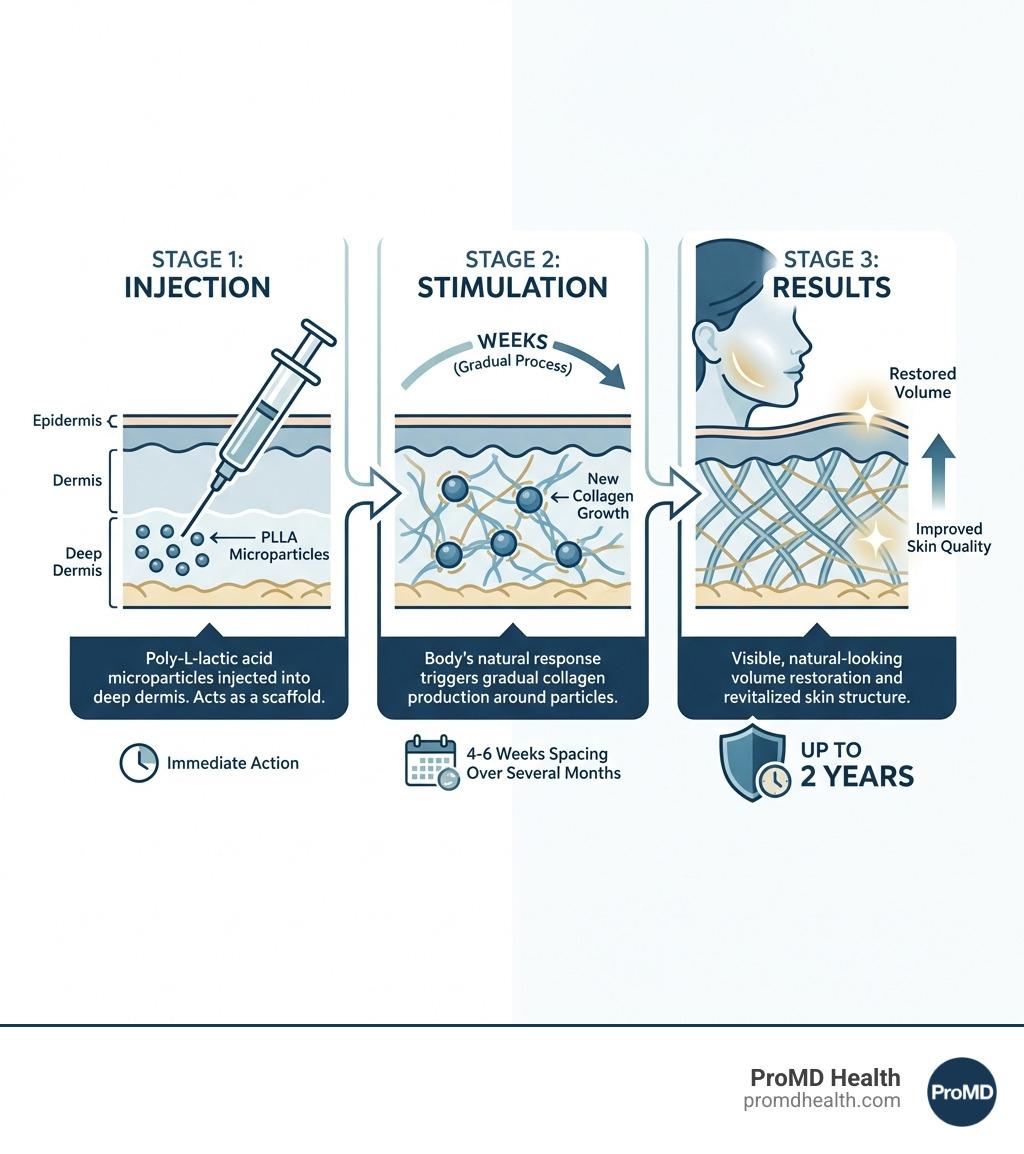
Sculptra is an injectable treatment designed to stimulate collagen production in the skin.
Its active ingredient is poly-L-lactic acid (PLLA), a biocompatible material that works by encouraging your skin to gradually produce more collagen.
This makes Sculptra different from traditional dermal fillers.
A simple way to understand the difference is:
Dermal filler → directly adds volume
Sculptra → stimulates your skin to gradually rebuild collagen
Because of this, Sculptra does not work like a conventional filler that creates an immediate, noticeable change.
After treatment, there may be some temporary fullness caused by the injected solution. However, the longer-term effect develops gradually as collagen production increases.
The goal is not to make the face look suddenly fuller.
Instead, Sculptra is designed to create a gradual and natural-looking improvement in facial volume, skin firmness, and overall skin quality.
Q2. Who is a good candidate for Sculptra?
Sculptra may be a good option for people who have noticed gradual facial volume loss and reduced skin firmness, but want to maintain a natural appearance.
You may want to consider Sculptra if:
Your face looks thinner or more hollow than it used to
You have lost volume in your cheeks or temples
Your skin feels less firm or elastic
Your face looks tired or more aged than before
You prefer gradual results rather than an immediate change
You want to avoid an overly “filled” appearance
You are looking for a natural approach to facial rejuvenation
One of the reasons people choose Sculptra is that the changes can be subtle.
Rather than creating a dramatic transformation overnight, the face can gradually look fuller, firmer, and more refreshed.
However, Sculptra is not necessarily the best treatment for everyone.
For some patients, the primary concern may be excess facial fat, significant skin laxity, or the need for very precise correction of a specific area.
In these cases, another treatment—or a combination of treatments—may be more appropriate.
That is why a proper assessment of your facial structure, volume distribution, skin quality, and degree of laxity is important before choosing Sculptra.
Q3. Where is Sculptra usually injected?
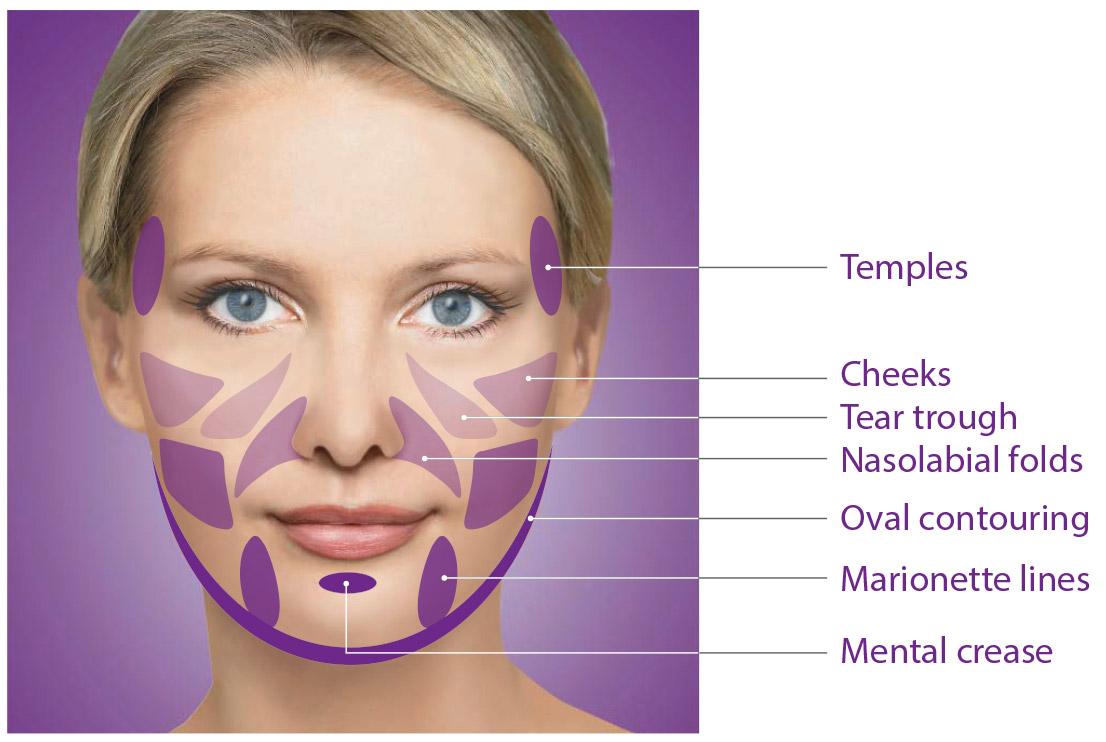
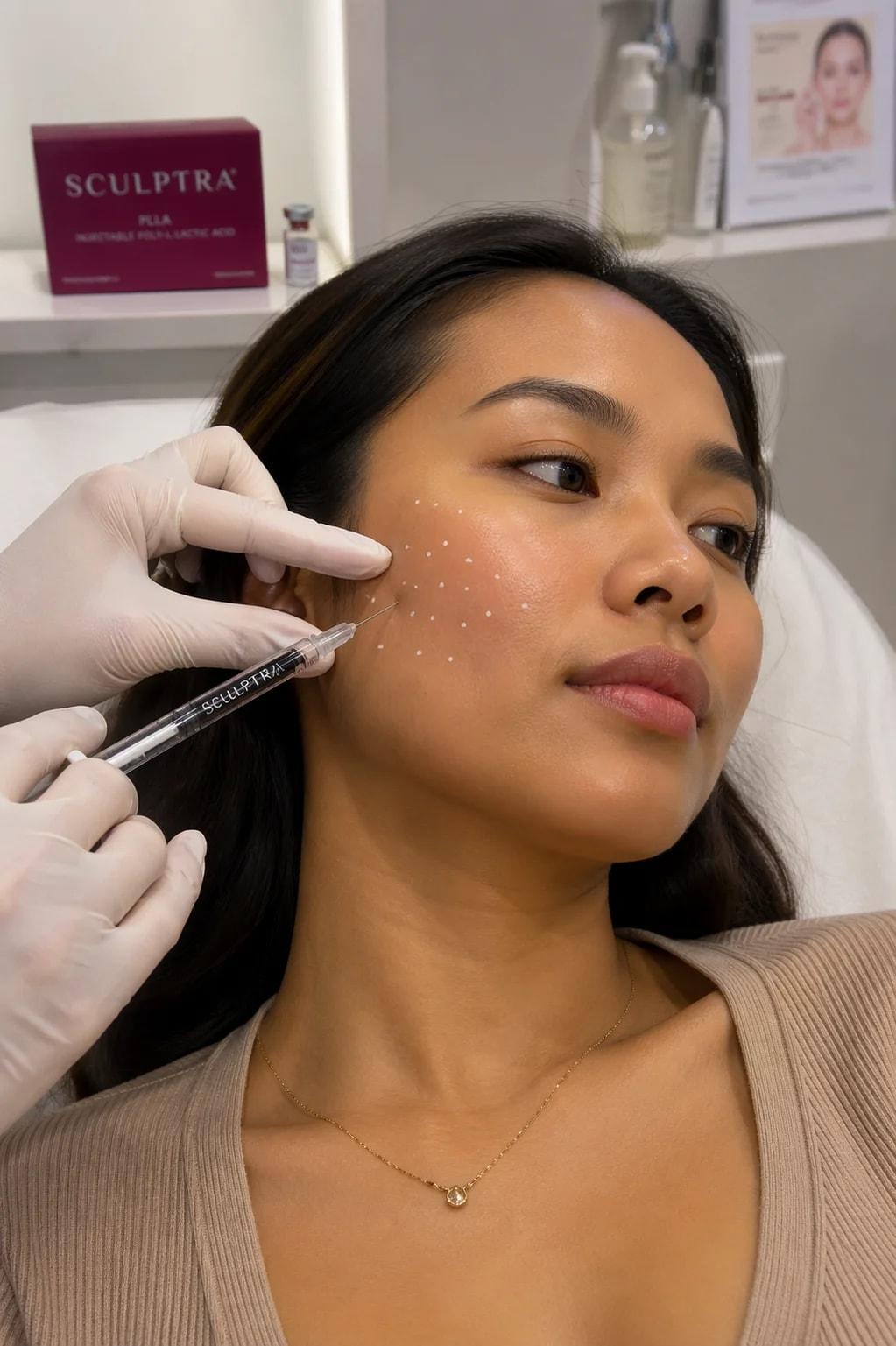
Sculptra can be used in several areas of the face, depending on the patient's anatomy and treatment goals.
Common treatment areas include the cheeks, midface, and temples.
Cheeks & Midface
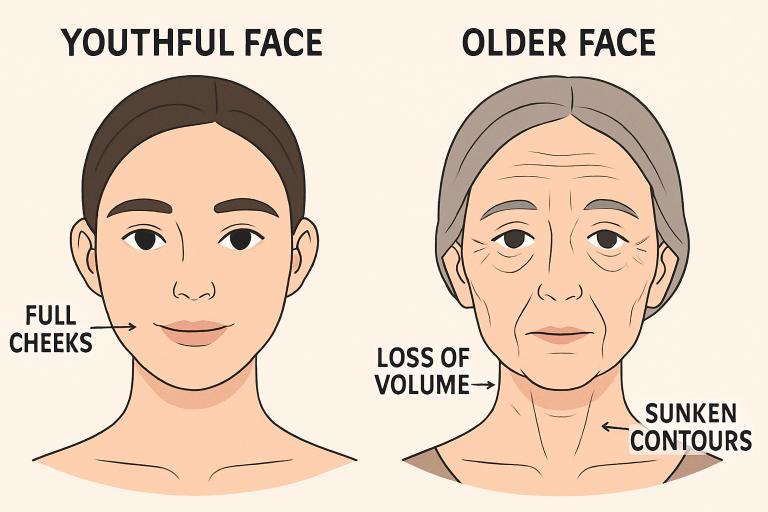
As we age, we gradually lose volume and structural support in the midface.
This can make the cheeks look flatter and may contribute to a tired or aged appearance.
Sculptra can be used to address overall volume loss while also improving skin firmness over time.
The goal is not necessarily to create prominent cheekbones, but to restore a more youthful balance to the face.
Temples
Hollow temples can become more noticeable with age and may make the face appear more angular or gaunt.
Sculptra can be considered when gradual volume restoration in the temple area is appropriate.
Around the Nasolabial Folds
Nasolabial folds—the lines that run from the sides of the nose toward the corners of the mouth—are not simply caused by a crease in the skin.
Changes in midface volume, soft-tissue descent, and reduced skin elasticity can all contribute to their appearance.
For this reason, treating the nasolabial folds does not always mean injecting directly into the lines.
In some patients, improving support and volume in the surrounding midface may create a more natural improvement.
Lower Face
In selected patients, Sculptra may also be considered as part of an overall facial rejuvenation plan involving the lower face.
The important question is not simply:
“Where can Sculptra be injected?”
but rather:
“Where does this particular face need support?”
The treatment area, amount, and injection technique should be individualized according to each patient's facial structure and goals.
Q4. How long does Sculptra take to work?
Sculptra is not designed to provide its full effect immediately.
Right after treatment, the treated area may appear temporarily fuller due to the injected solution and local swelling.
However, this should not be confused with the long-term Sculptra result.
The longer-term effect develops gradually as collagen production is stimulated.
This means Sculptra is better thought of as a progressive rejuvenation treatment rather than an instant volume treatment.
For patients who prefer subtle changes that develop over time, this can be one of Sculptra’s biggest advantages.
Q5. How many Sculptra treatments do I need?
There is no single treatment schedule that is right for everyone.
The number of sessions and the amount used depend on factors such as:
Age
Degree of facial volume loss
Skin quality
Treatment area
Overall facial structure
Desired degree of correction
Rather than trying to create a dramatic change in one session, Sculptra is often incorporated into a gradual treatment plan.
Your provider can determine the appropriate number of sessions based on how your face responds and how much correction is needed.
Q6. Sculptra vs. Filler: What’s the difference?
This is one of the most common questions patients ask.
Both Sculptra and dermal fillers can be used to improve facial volume, but they work differently.
Sculptra | Dermal Filler | |
|---|---|---|
Main approach | Stimulates collagen production | Directly adds volume |
Results | Develop gradually | Usually visible immediately |
Main strength | Gradual, natural-looking rejuvenation | Precise volume and contour correction |
Often considered for | Overall volume loss and skin firmness | Specific areas requiring precise correction |
For example, if you want to precisely shape the lips, chin, or another specific area, a dermal filler may be more appropriate.
If you have more generalized volume loss and want a gradual improvement in overall facial fullness and skin quality, Sculptra may be worth considering.
Neither treatment is universally “better.”
The right choice depends on what is causing your facial changes and what kind of result you want.
Q7. Does Sculptra look natural?
Natural-looking results are one of the main reasons patients choose Sculptra.
Because the results develop gradually rather than appearing all at once, Sculptra can be a good option for people who want their appearance to improve without looking obviously “done.”
The goal may be for people to notice that you look:
“more refreshed,”
“healthier,”
or simply
“younger.”
rather than being able to tell exactly what treatment you had.
This makes Sculptra particularly appealing to patients who want subtle, progressive facial rejuvenation.
Q8. What are the side effects of Sculptra?
Like any injectable treatment, Sculptra can cause temporary side effects.
Common reactions may include:
Swelling
Bruising
Tenderness
Redness
Mild discomfort
These generally improve with time.
Because Sculptra stimulates collagen production, proper injection technique, treatment planning, and patient selection are particularly important.
In some cases, patients may develop palpable lumps or nodules.
For this reason, Sculptra should not be approached simply as a product that is injected wherever volume is missing.
The injector’s understanding of facial anatomy and appropriate treatment technique is an important part of the treatment.
If you experience persistent or unusual symptoms after treatment, contact your healthcare provider for evaluation.
Q9. What should I do after Sculptra?
After Sculptra treatment, follow the aftercare instructions provided by your healthcare professional.
Depending on your treatment plan, you may be given specific instructions regarding massage, pressure, exercise, heat exposure, or other activities.
It is also important to monitor the treated area during the recovery period.
If you develop significant or persistent swelling, pain, unusual skin changes, or firm lumps, contact your provider rather than trying to manage the problem yourself.
Sculptra is not simply a treatment that ends when you leave the clinic.
The post-treatment period is also an important part of the overall treatment process.
Q10. Is Sculptra right for everyone?
No.
Even though Sculptra can be an excellent option for many patients, it is not necessarily the right treatment for every face.
For example, if excess facial fat or significant skin laxity is the primary concern, another treatment may be more appropriate.
Likewise, if you need very precise correction of a specific facial feature, a dermal filler or another procedure may provide a more predictable solution.
This is why the most important question is not simply:
“Should I get Sculptra?”
Instead, ask:
“What is actually making my face look older?”
Is it volume loss?
Loss of skin firmness?
Soft-tissue descent?
Or a combination of several factors?
Once the underlying cause is identified, Sculptra can be considered as one part of a personalized treatment plan.
Sculptra Is Not Just About Adding Volume. It’s About Restoring the Way Your Face Ages.
Sculptra offers a different approach to facial rejuvenation.
Rather than simply filling a hollow area, it uses collagen stimulation to create gradual changes in facial volume and skin quality.
That is why successful Sculptra treatment is not simply about how much product is used.
It is about understanding:
where volume has been lost,
how the face has changed with age,
and where collagen stimulation may create the most natural improvement.
The same product can produce very different treatment plans for different faces.
For some patients, Sculptra may be the right choice.
For others, a filler, energy-based treatment, lifting procedure, or combination approach may make more sense.
Ultimately, the goal is not to make you look like someone else.
It is to help your face look like a naturally refreshed version of you.
Frequently Searched Questions About Sculptra
What is Sculptra?
Sculptra is an injectable treatment containing poly-L-lactic acid (PLLA) that stimulates collagen production.
How does Sculptra work?
It works by stimulating the skin’s natural collagen production, allowing results to develop gradually.
Is Sculptra a filler?
Sculptra is generally considered a collagen stimulator rather than a traditional volumizing dermal filler.
How long does Sculptra take to work?
Results develop gradually rather than appearing immediately after treatment.
How many Sculptra treatments do I need?
The number of treatments varies depending on your facial structure, skin condition, degree of volume loss, and treatment goals.
Is Sculptra better than filler?
Neither is universally better. The appropriate treatment depends on the specific problem being treated and the desired outcome.
Does Sculptra look natural?
Because the results develop gradually, Sculptra can provide a subtle and natural-looking approach to facial rejuvenation.
Where is Sculptra injected?
Common treatment areas include the cheeks, midface, and temples, although the appropriate treatment areas vary from patient to patient.
What are the side effects of Sculptra?
Temporary swelling, bruising, tenderness, redness, and discomfort can occur. Less common complications such as lumps or nodules can also occur.
Who is a good candidate for Sculptra?
People experiencing gradual facial volume loss or reduced skin firmness who prefer a gradual, natural-looking approach may be good candidates.
Consultation and Reservation Inquiries
Please feel free to contact us with any questions you may have.