How to Get Rid of Dark Circles
- Author
- IN SEOK KYUNG
- Date
- 2026.08.02
- Views
- 479
The causes of dark circles are all different.
Many people think all dark circles are the same. But in reality, the reasons they appear dark are different, so the treatments are completely different too.
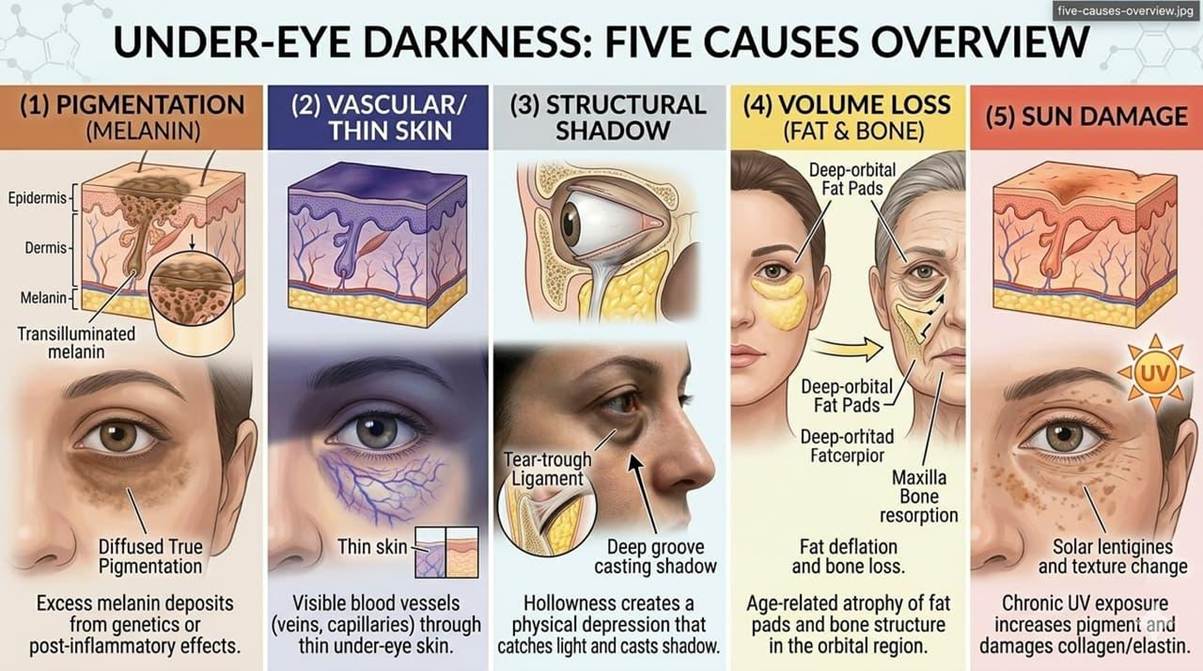
Some people have darkness due to pigmentation, some have thin skin that lets the muscle show through, and in other cases, protruding under-eye fat creates a shadow. This is exactly why simply applying eye cream or getting laser treatment without knowing the cause often leads to unsatisfying results.
Today, let's take an easy look at the three most common types of dark circles
.
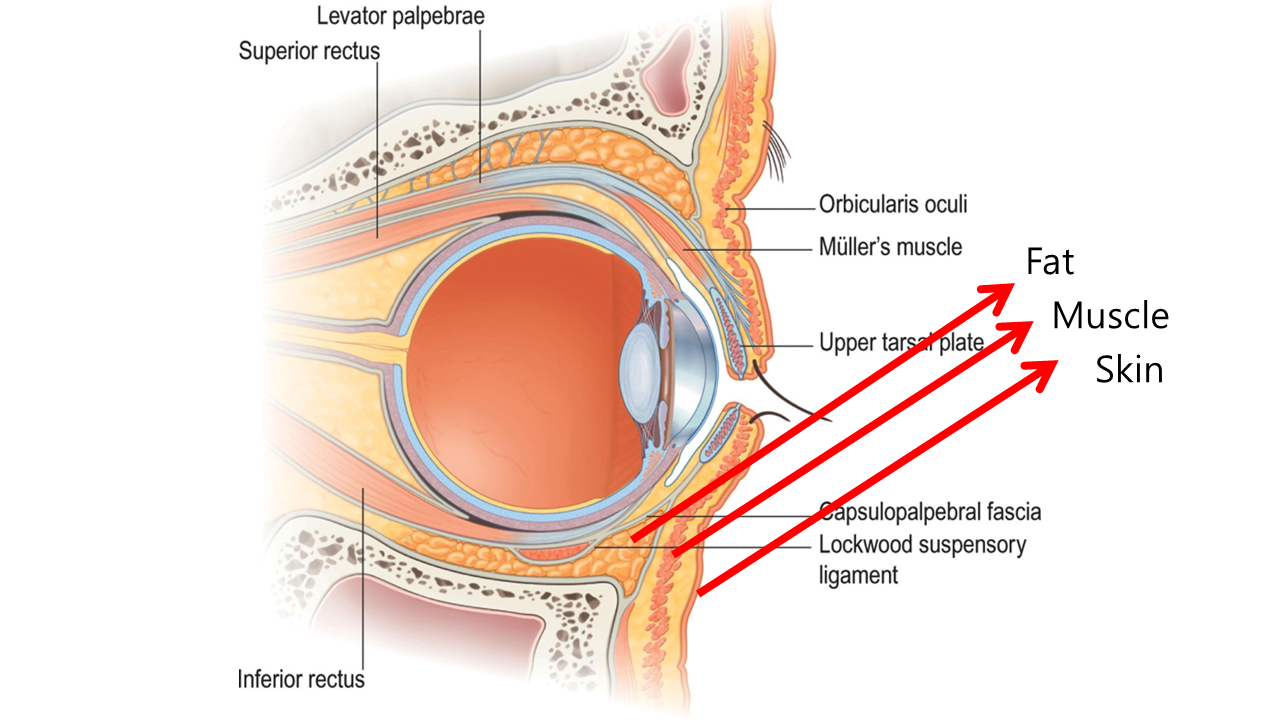
As you can see in the image above, in simple terms:
Skin
Muscle
Fat
these become the causes of dark circles, and they usually occur in combination. Let's look at each type one by one.
① Pigmented Dark Circles (Skin Type)
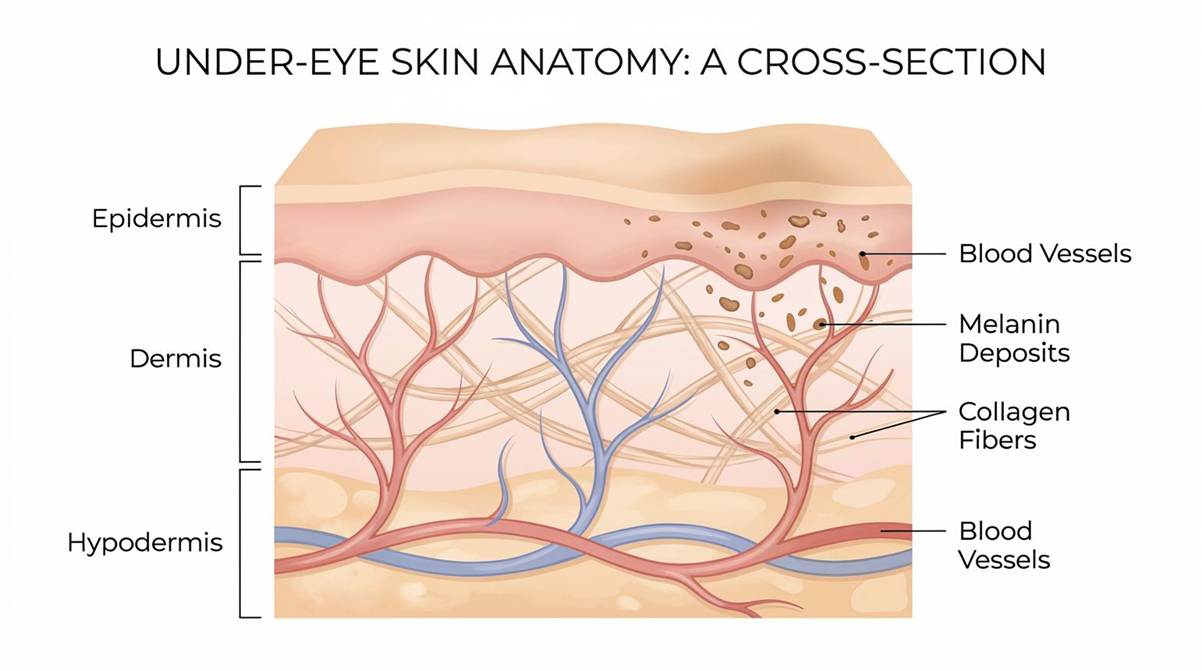
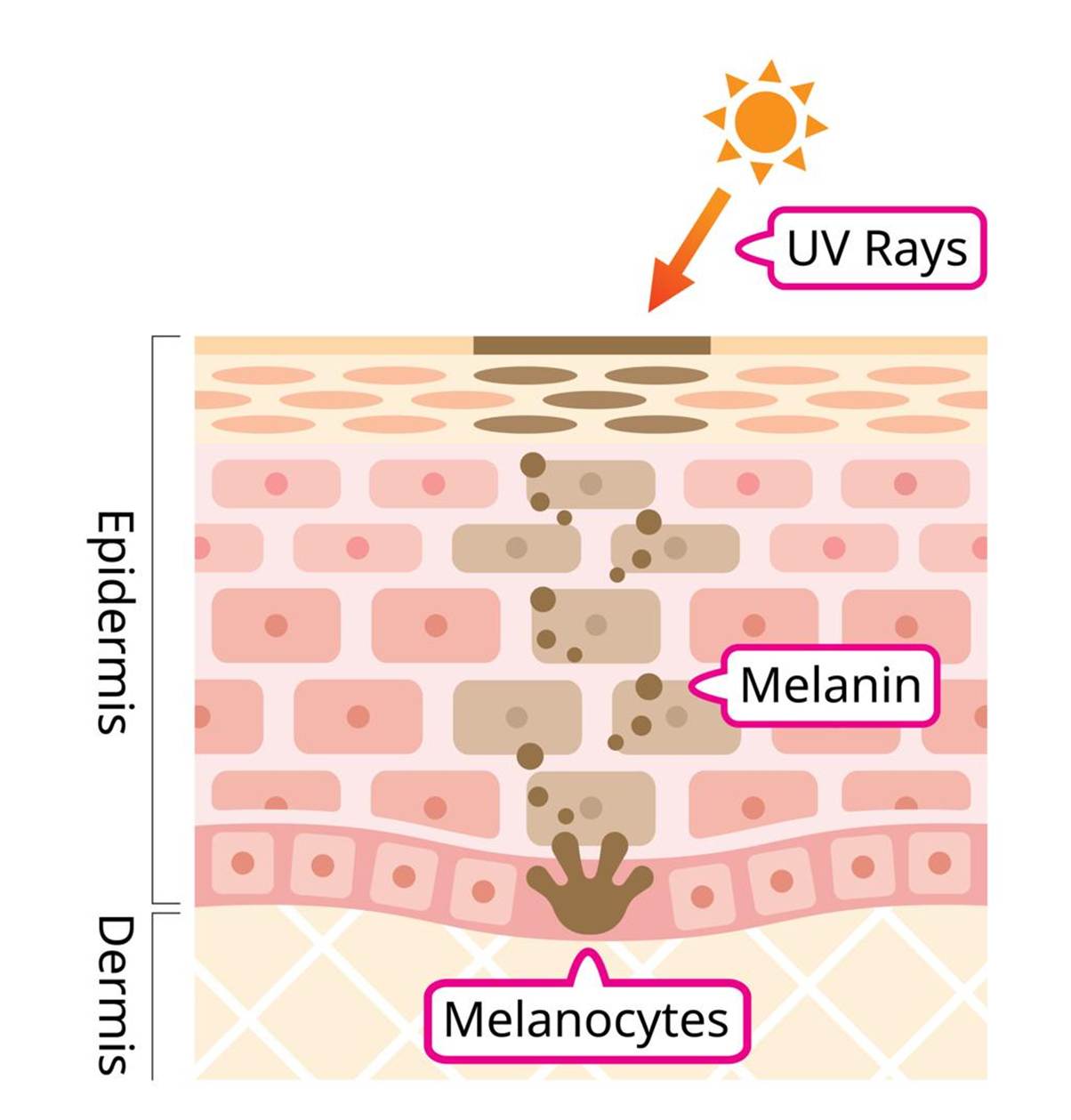
Characteristics
This type occurs when melanin pigment increases in the under-eye skin itself, appearing brown or dark brown. It is common among Southeast Asians or people with darker skin tones, and surprisingly, it doesn't account for as large a proportion as one might think among East Asians, including Koreans.
Long-term sun exposure,
frequent eye rubbing,
or chronic inflammation such as atopic dermatitis can easily cause this.
Treatment
In this case, treatments that reduce pigmentation are more important than treatments that thicken the skin.
Sun protection
Wearing sunglasses
Toning laser
Pigment laser
are the most effective treatments.
② Vascular Dark Circles (Muscle Type)
The most common type of dark circles
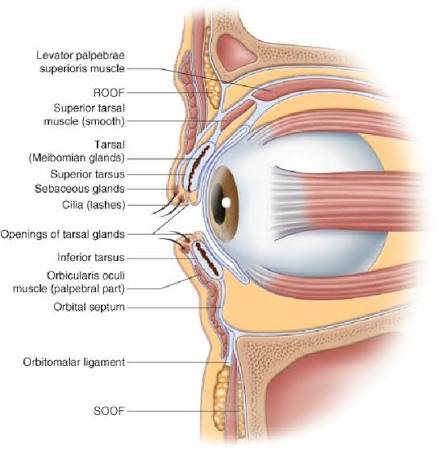
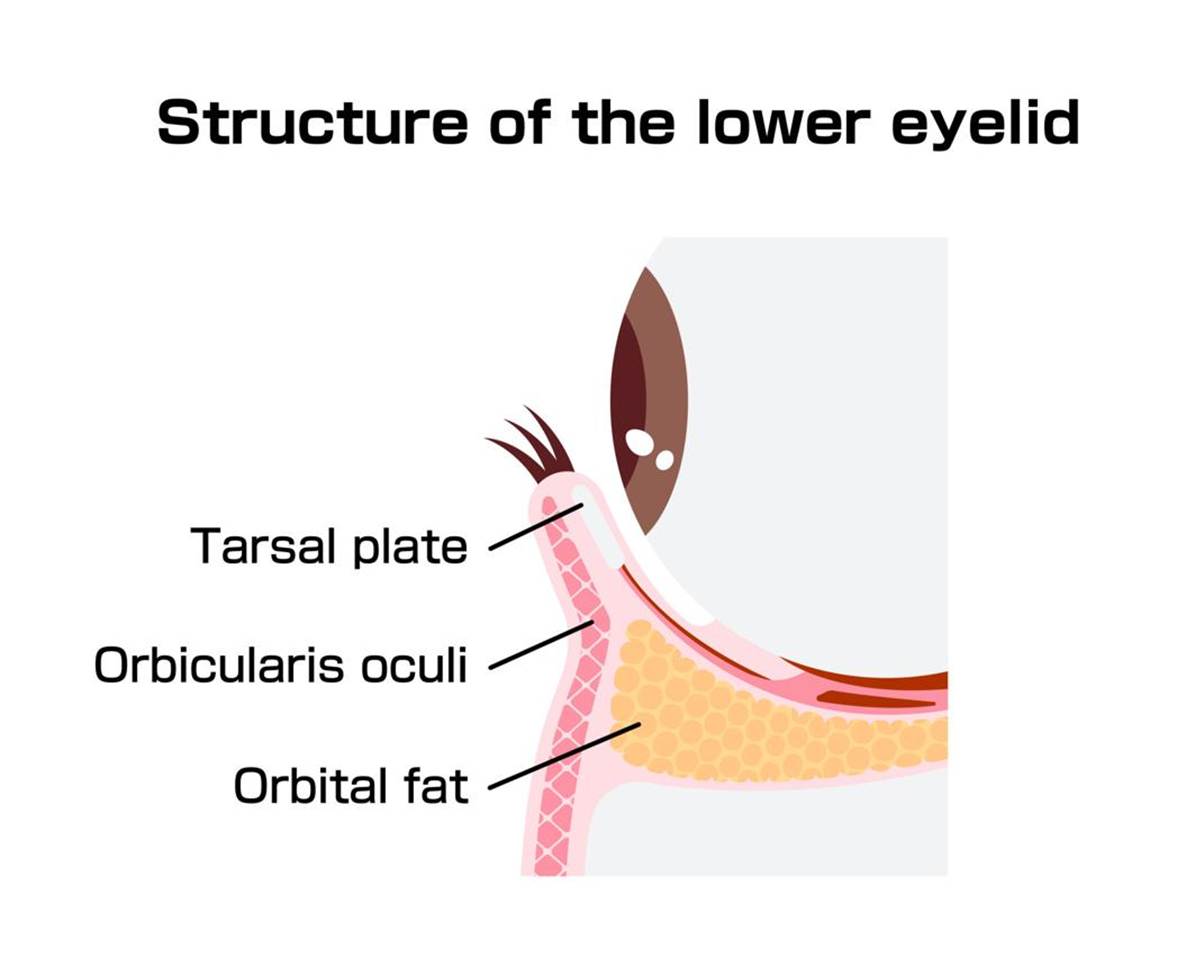
Most East Asians, including Koreans, have this type most often.
It's not that dark circles have formed—it's that the under-eye skin is so thin that the muscle shows through. The muscle that closes the eye is called the orbicularis oculi muscle (OOM), and this muscle is red in color. But when seen through the skin, the red appears bluish-black, which makes it look like dark circles.
This is also why dark circles get worse when you're tired. When oxygen in the blood decreases, the blood appears darker red, and this shows through the thin skin directly. Conversely, dark circles becoming a bit lighter when you're in good condition follows the same principle.
Also, the fairer a person's skin, the higher the skin's translucency, so dark circles are often more visible.
Key to Treatment
In this case, the most important thing is making the skin thicker and healthier.
In the past,
Eye Thermage (RF),
radiofrequency treatment,
skin boosters,
and similar treatments to improve skin elasticity were the main approach.
Recently, Re2O treatment, which directly replenishes the ECM (extracellular matrix), has become a good option. Re2O replenishes ECM between the skin and the orbicularis oculi muscle,
making the skin firmer,
increasing skin thickness,
and making the muscle less visible,
which can help improve dark circles. It's not simply about tightening the skin—it's easier to understand as a concept of replenishing the skin's own building materials.
③ Structural Dark Circles (Fat Type)
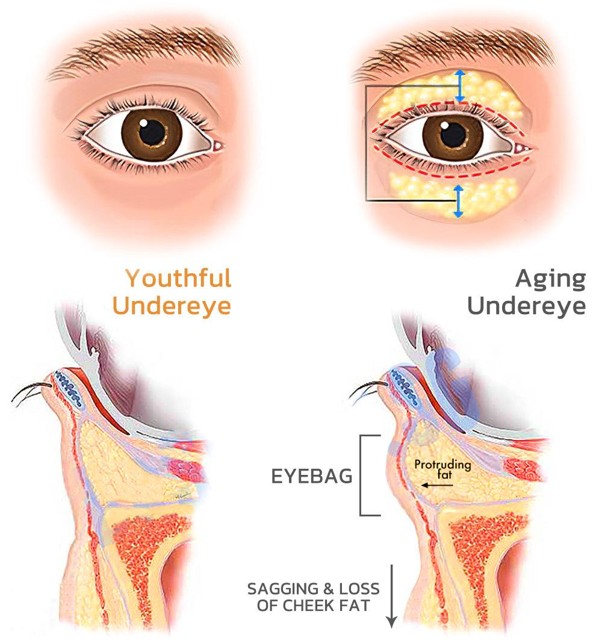
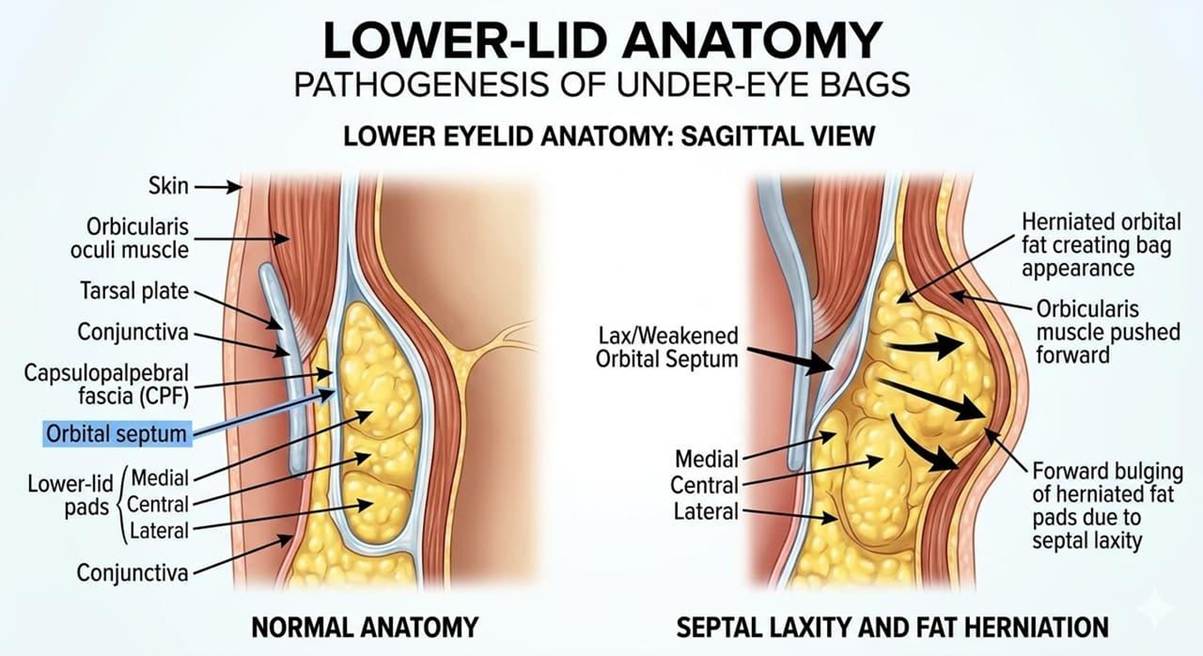
This type commonly appears from around age 35 onward.
As we age, skin elasticity decreases, and the orbital septum weakens, causing the fat that was originally under the eyeball to move forward. This is what we commonly call under-eye fat, or eye bags.
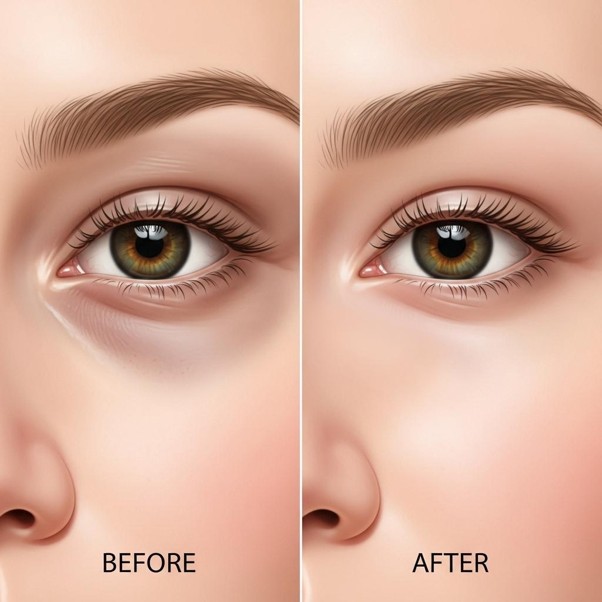
The problem is that when the fat protrudes, a shadow forms below it, and even though the actual skin color is normal, it appears like dark circles.
Treatment
Improving skin elasticity,
strengthening the orbital septum,
and lifting treatments
can be tried first, and in cases of severe fat protrusion, under-eye fat repositioning surgery may be the most effective treatment.
④ Combination Dark Circles
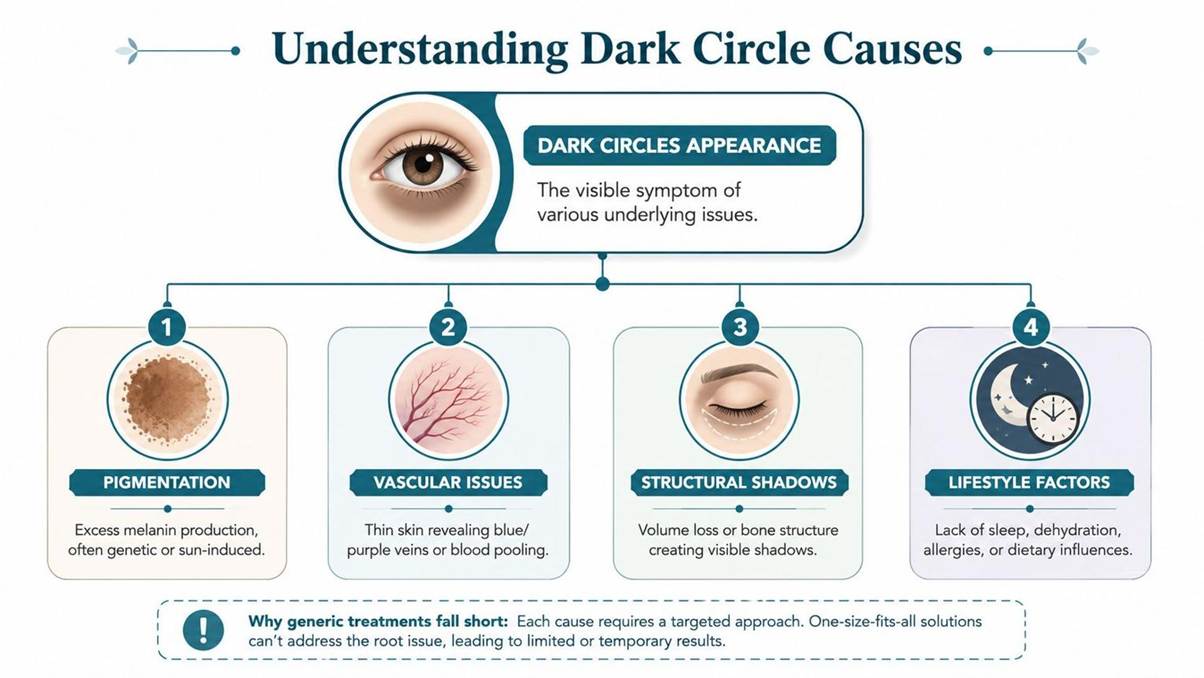
This is the type most commonly seen in actual clinical practice.
The skin thins,
there's slight fat protrusion,
some pigmentation is present,
and multiple causes exist together.
In this case, a single treatment alone is difficult to resolve the issue.
For example, if the skin is too thin but only pigment laser is repeated, satisfaction may be low. Conversely, if there's significant fat protrusion but only skin boosters are administered, sufficient improvement is difficult.
So the most important thing is to first accurately diagnose the cause.
After finding the cause, treating the biggest problem first, one at a time, leads to much more natural and satisfying results.
Dark Circle Types at a Glance
Type | Cause | Most Effective Treatment |
Pigmented type | Increased melanin | Sun protection, toning laser |
Muscle (vascular) type | Thin skin showing the muscle through | Eye Thermage, ECM (Re2O) |
Structural type | Under-eye fat protrusion and shadow | Elasticity treatment, under-eye fat repositioning |
Combination type | Multiple causes present simultaneously | Cause-specific customized treatment |
Dark circles are not a single condition but a result created by multiple causes. So accurately distinguishing whether it's pigmentation, thin skin, or protruding fat is the first step in treatment. In particular, among East Asians including Koreans, the "muscle (vascular) type," where thin skin allows the orbicularis oculi to show through, is very common, and in this case, treatments that make the skin healthy and thick are key to increasing satisfaction. The approach of replenishing ECM between the skin and muscle is gaining attention as a treatment strategy that directly targets this cause.

Doctor · Lifting Center, Anti-aging Center