How to Get a Natural-Looking Lip Filler
- Author
- IN SEOK KYUNG
- Date
- 2026.08.09
- Views
- 454
7 Essential Things to Know About Lip Fillers
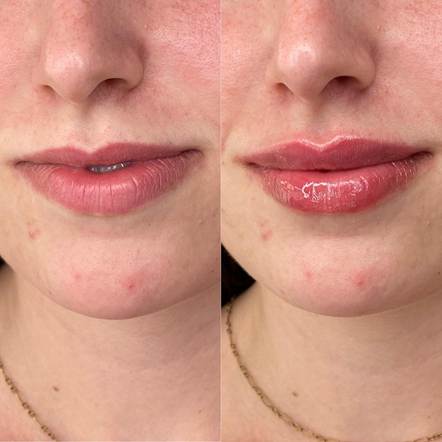
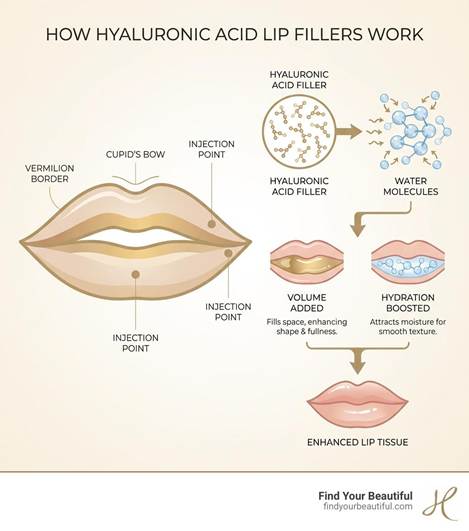
When considering lip fillers, these questions often come up:
"Does lip filler always make the lips thicker?"
"How painful is it?""Are there any side effects?"
"Which clinic should I go to for a natural result?"
Lip filler is not simply a procedure that adds volume to the lips.
Achieving a natural result requires considering lip thickness, contour, left-right balance, and how the lips harmonize with the surrounding face.
Today, we'll simply summarize the essential information for those exploring lip fillers for the first time.
1. What is lip filler?
As the name suggests, lip filler is a procedure that injects a substance called filler around the lips to improve their volume or shape.
One of the most commonly used filler ingredients today is hyaluronic acid (HA).
Hyaluronic acid is a substance naturally present in our bodies, and because it attracts water, it can create volume in the skin and tissue.
Lip filler doesn't necessarily mean making the lips bigger.
For example,
When the lips look too thin
When the upper and lower lips are imbalanced
When the lip contour is blurred
When the left and right sides of the lips differ in shape
When the lips look dry and lacking volume
When the lips have thinned with age
can all be addressed for various purposes.
Ultimately, good lip filler isn't about creating "big lips"—it's about creating lips that suit your face.
2. How is lip filler performed?
Lip filler may seem simple, but it's actually a procedure that requires a thorough understanding of lip anatomy.
Since blood vessels and various tissues are complexly distributed in the lips, the physician determines the injection location, depth, and amount by considering the patient's lip shape and vascular structure.
The general process is as follows:
① Consultation → ② Design → ③ Anesthesia → ④ Filler injection → ⑤ Shape check and finishing
First, the current lip shape and left-right balance are checked.
Next, considering the style the patient wants and the current condition of the lips, it is decided where and how much volume to add.
Rather than injecting a large amount at once, filler can be administered gradually in the necessary areas while checking the shape as you go.
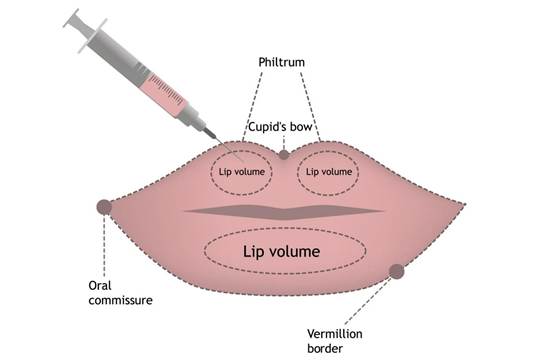
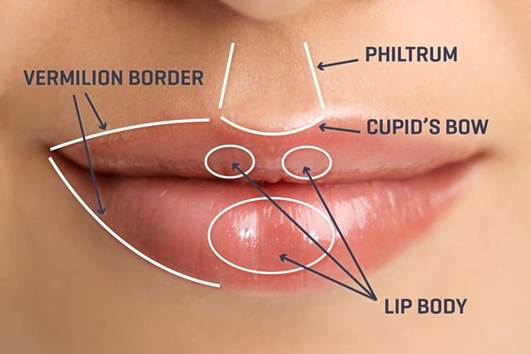
Volume isn't the only thing that matters for the lips.
The lips involve several elements, including the lip contour, Cupid's bow, and the thickness and projection of the lips.
Therefore, even with the same 1cc of filler, the result can vary significantly depending on where and how it is injected.
3. Why get lip filler?
The purpose of lip filler varies from person to person.
① Making the lips a bit fuller
This is the most common purpose.
If the lips are naturally thin or lack volume, an appropriate amount of filler can make them a bit fuller.
② Defining the lip line
If the lip border is blurry, the contour can be made a bit more defined.
③ Improving left-right asymmetry
A person's face is never perfectly symmetrical to begin with.
The lips, too, may differ slightly in size or shape between the left and right sides, and filler can help reduce this difference.
④ Improving lip proportion
It can also adjust the overall impression by considering the ratio between the upper and lower lips, and the relationship between the lips, nose, and chin.
⑤ Improving lips that have thinned with age
As we age, lip volume decreases and fine lines around the lips increase, which can make the lips look thinner than before.
In this case, rather than simply making the lips bigger, appropriately restoring the lost volume can produce a more natural result.
4. Who is a good candidate for lip filler?
Lip filler may be worth considering for people such as those below.
It may be especially suitable for:
Those who want their lips a bit fuller
Those concerned about lip asymmetry
Those with a blurry lip contour
Those who feel their lips have thinned with age
Those who want to naturally improve their lip shape
Those who want a lip design that suits their whole face
On the other hand, if size itself is considered the most important goal—such as "please make my lips as big as possible no matter what"—thorough consultation is needed.
This is because the lips are not an area that automatically becomes more beautiful simply by adding more filler.
In addition, if you are pregnant or breastfeeding, have an infection or inflammation around the lips, or have a history of allergies to certain medications or filler ingredients, you must inform your medical team before treatment.
5. How should I care for my lips before and after filler?
Because the lips are rich in blood vessels and highly mobile, swelling and bruising can appear more noticeably than in other areas.
Right after the procedure, the lips may look significantly bigger than usual.
This is because, in addition to the volume of the filler itself, temporary swelling from the procedure also occurs.
Common changes after the procedure
Swelling
Bruising
Slight pain or discomfort
Temporary redness
A firm feeling at the injection site
Most of these are temporary changes that gradually improve over time.
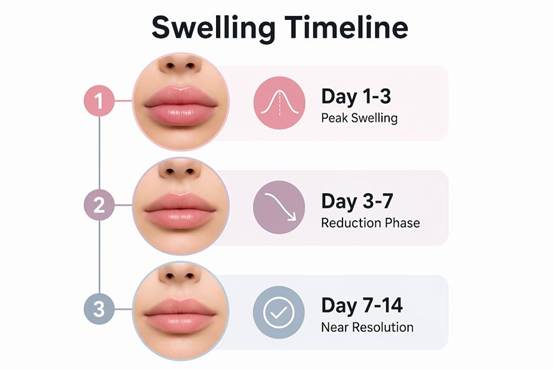
Before the procedure:
Inform your medical team of any medications or supplements you're taking
Share any past filler treatment experience and side effects
Let them know in advance if there is inflammation or a skin condition around the lips
If you have an important event coming up, schedule the procedure with enough buffer time
After the procedure:
Generally, in the early period, it's best to avoid intense exercise or heat exposure and follow the aftercare guidance provided by your medical team. The American Society of Plastic Surgeons also advises that avoiding strenuous exercise for the first 24–48 hours after filler treatment can help reduce swelling and bruising.
And one more important thing.
Right after the procedure, it's best not to immediately judge, "Is this too big?" when looking in the mirror.
This is because the appearance after the initial swelling subsides can be quite different.
6. Is lip filler safe?
In most cases, it can be performed safely, but it is not a "risk-free procedure."
The commonly experienced reactions to lip filler include temporary swelling, bruising, pain, and tenderness.
However, in very rare cases, serious complications such as vascular occlusion—where filler blocks a blood vessel—can occur.
If vascular occlusion occurs, reduced blood flow can lead to skin damage or necrosis, and in extremely rare cases, serious problems such as vision impairment may occur.
This is why, when it comes to lip filler, it's important not simply to look for
"a place where you can get filler cheaply,"
but rather to choose
"a place with the medical team and system in place to respond if a problem occurs."
7. How do I choose a clinic that's good at lip filler?
When researching lip filler, many people's first search is "which filler is best?"
Of course, the properties of the filler matter too.
But for lips, there's something more important than that.
That is "who designs and injects it, and how."
① Is there sufficient pre-treatment consultation?
A clinic that starts with "how many cc's would you like?" is less ideal than one that starts by asking
"what kind of lips do you want."
② Do they avoid overfilling by default?
The standard for good lip filler isn't the biggest lips.
What matters is creating lips that suit the whole face and look natural even when smiling or talking.
③ Do they avoid treating the lips in isolation?
The lips are not an isolated feature.
The ideal lip shape also varies depending on nose length, philtrum, chin shape, and the width and projection of the face.
So it's good to check whether the design considers the balance of your entire face.
④ Can you confirm the type of filler and whether it's genuine?
It's also important to check what product is being used, whether it's genuine, and whether you can verify its expiration date and product information.
⑤ Can they respond if a problem occurs?
This point matters more than you might think.
Although rare, filler procedures can lead to serious issues such as vascular complications, so it's good to check whether the clinic has a system in place to recognize and immediately respond to such complications.
Ultimately, the most important thing in lip filler is
Getting lip filler doesn't mean you must end up with "thick lips."
For some people, even a very small volume change is enough,
while for others, refining the lip contour may be more important.
For others still, considering the overall facial balance, including the lips, nose, chin, and philtrum, may matter more than the lips alone.
So when choosing lip filler,
rather than asking "how much should I get,"
try asking yourself first, "what kind of lips would suit my face?"
Natural-looking lip filler should aim not for
the feeling of "I got filler" but rather the feeling that "my lips were naturally this pretty all along."

Doctor · Lifting Center, Anti-aging Center